Child Fever: Home Care vs When to See a Pediatrician in Nashik
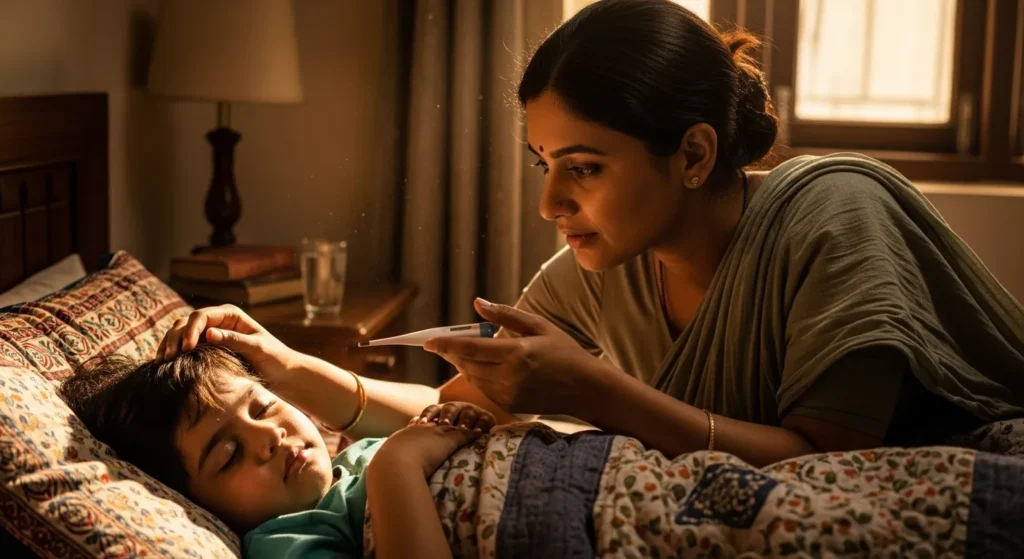
Fever is one of the most common reasons parents worry—especially at night. Often, it’s the body’s way of responding to infection. What parents usually need is a clear plan: what to track, how to keep the child comfortable, and when to take a doctor’s opinion.
This guide gives practical fever basics for parents in Nashik.
Quick Summary
- Fever is usually 38°C (100.4°F) or higher.
- Track the child’s energy, drinking, urine, breathing, and fever pattern.
- Hydration and comfort steps matter as much as the temperature number.
- If fever persists beyond 2–3 days or the child looks unusually unwell, consult a pediatrician.
What counts as fever?
A common fever threshold is:
- 38°C (100.4°F) or higher
Temperature tips
- Use a digital thermometer.
- Take readings at consistent times.
- Note the method used (so comparisons stay consistent).
Common reasons for fever in children
- viral infections (cold/flu-like)
- throat or ear infection
- stomach infection
- urinary infection
- seasonal viral fevers
Fever is a symptom, not a diagnosis. Patterns and associated symptoms help doctors narrow causes.
What to track at home (simple checklist)
Instead of watching only the number, track:
- child’s activity level (playing vs very sleepy)
- drinking fluids and urination
- breathing comfort
- vomiting/diarrhea
- rash
- pain (ear/throat/belly)
- fever pattern (how often, how high)
A simple phone note helps:
- temperature + time
- medicines + time
- symptoms (cough, loose motions, rash)
Home-care steps that help
1) Fluids + rest
Offer small sips frequently:
- water
- ORS (as advised)
- soups or coconut water (as suitable)
2) Light clothing
Avoid over-wrapping. Keep the room comfortable.
3) Food
If appetite is low, keep meals light. Hydration is the priority.
4) Medicines
Use only the dose and schedule advised by the child’s doctor. Use a proper measuring device.
When to consult a pediatrician in Nashik
A pediatric visit is commonly recommended when:
- fever lasts more than 2–3 days
- fever keeps returning after it settles
- child refuses fluids or urinates much less
- repeated vomiting or loose motions
- breathing looks fast or difficult
- rash appears with fever
- severe throat pain, ear pain, or persistent cough
- child has a known medical condition (asthma, heart condition, immunity concerns)
What happens at the clinic
A pediatric evaluation usually includes:
- symptom history and fever timeline
- physical examination
- tests only if needed (based on symptoms and day of fever)
Prevention basics
- hand hygiene at home and school
- safe drinking water
- mosquito prevention during season
- vaccinations as per schedule
FAQs
Is high fever always dangerous?
Not always. The child’s overall condition and hydration are equally important.
Can vaccines cause fever?
Some children may get fever after vaccination. If it persists or other symptoms appear, a check helps.
Is sponging useful?
Lukewarm sponging is used by some parents for comfort.

0 Comments